
Car Written Off: What Happens Next, Step by Step
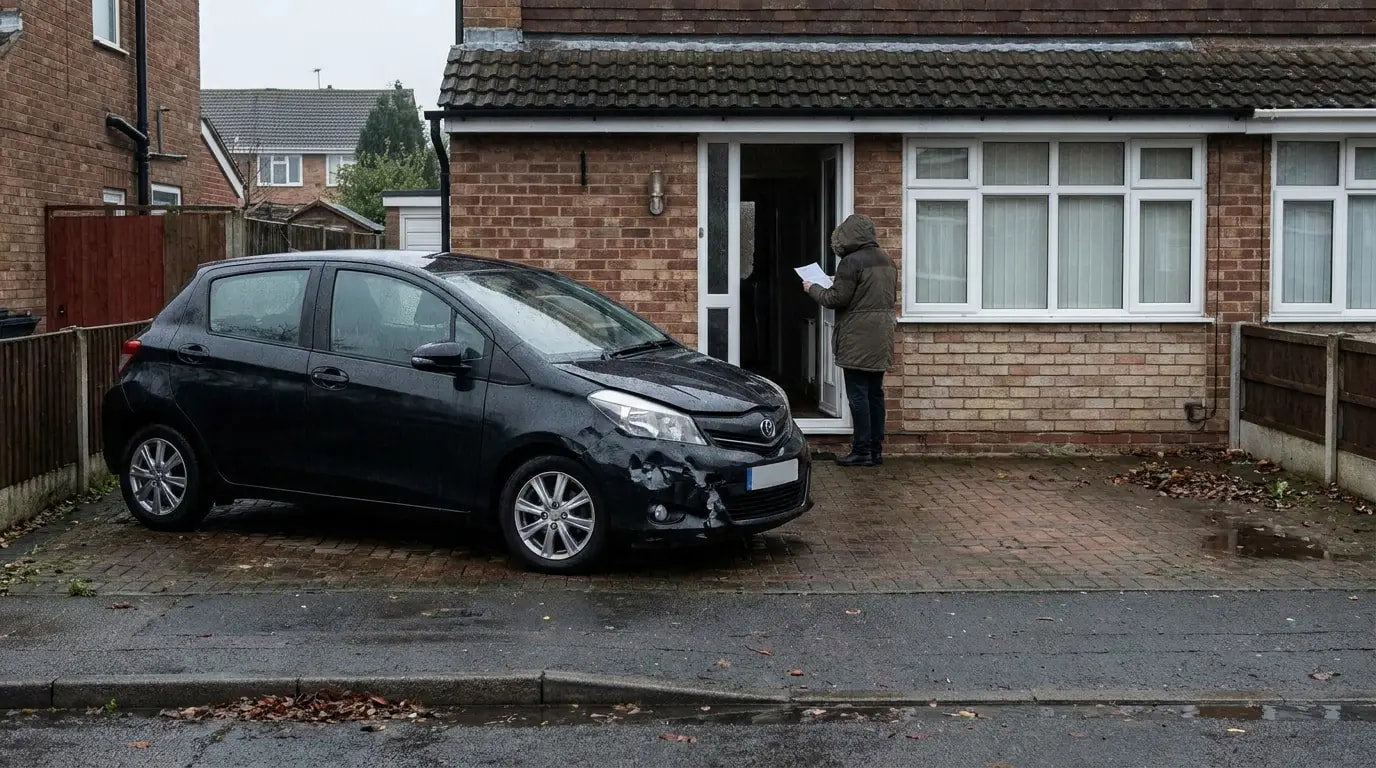
Your Car's Been Written Off. Here's Exactly What Happens Next
The call comes, the word "write-off" lands, and then nothing is explained. What actually happens between that call and money in your account follows a predictable path, and knowing it in advance means you make the one decision that matters before it gets made for you.
Step one: the assessment and the decision
An engineer assesses the damage, physically or from images, and compares the repair estimate against your car's pre-accident value. When repairs approach or pass the insurer's threshold, the car is declared a total loss. With repair costs and parts prices where they are, that threshold trips earlier every year, which is why so many written-off cars today carry surprisingly light damage.
Step two: the category
The car is assigned its letter. Cat N for non-structural damage, Cat S for structural, Cat A and B for cars whose road life is over. The letter decides the paperwork and shapes the car's value from here, and our complete category guide covers each one in depth.
Step three: the offer
The insurer proposes a settlement based on the car's pre-accident value. This figure is an opening position built from trade data, and it deserves scrutiny rather than a reflex signature. We've written a full guide on whether to accept the write-off offer, because under-offers are common and challengeable.
Step four: the decision almost nobody is told about
Before you accept anything, you can usually ask to retain the vehicle. The insurer deducts a salvage figure from your settlement and the car stays on your drive, yours to sell. That deduction is priced at the bottom of the salvage chain; the direct market pays more, and the difference goes to whoever owns the car when it sells. Hand the car over instead, and that margin is shared between the salvage chain and the auction system.
One recent seller retained their written-off BMW X3, listed it on Second Gears with a few photos, and had it collected and paid for within 24 hours, £2,600 more than the salvage deduction. The buy-back explainer walks through the mechanics.
Step five: paperwork and payment
Accept the settlement and the money typically follows within days. If you've retained a Cat S, notify the DVLA and apply for the replacement V5C; a Cat N keeps its original log book. Keep every document, including the settlement letter, because buyers pay more for a car with a clean paper story.
How long does the whole thing take?
From accident to assessment is usually days, assessment to offer days more, and acceptance to payment days again. A straightforward write-off commonly resolves inside a few weeks; disputes over valuation or liability extend it. If the accident wasn't your fault, the claim can be run against the at-fault insurer with a replacement car provided throughout, which is what Second Gears Accident Care handles end to end.
If you've retained the car, finish the job
The write-off process ends with a car on your drive and one task left: selling it properly. List it free on Second Gears and verified UK trade buyers, rebuilders, dealers and breakers, make direct offers and arrange collection. Retain your vehicle, sell direct, not at auction, and keep the difference.
Related Articles

The Fastest-Growing Car Rebuilders in the UK Right Now and What They’re Fixing
Britain's rebuild scene has gone mainstream. What was once a quiet corner of the trade is now an industry attracting serious money, online audiences i...
Non-Fault Accident: What to Do Step by Step (UK 2026)
Someone Hit Your Car and It Wasn't Your Fault. Here's Exactly What to DoA non-fault accident puts you in a strange position: you did nothing wrong, ye...
What the Bugatti Saga Taught 10 Million People About Salvage
What the Bugatti Saga Taught 10 Million People About SalvageThe most-watched car content of the year isn't a launch film or a track test. It's Mat Arm...