
How to Put a Cat S or Cat N Car Back on the Road (UK)
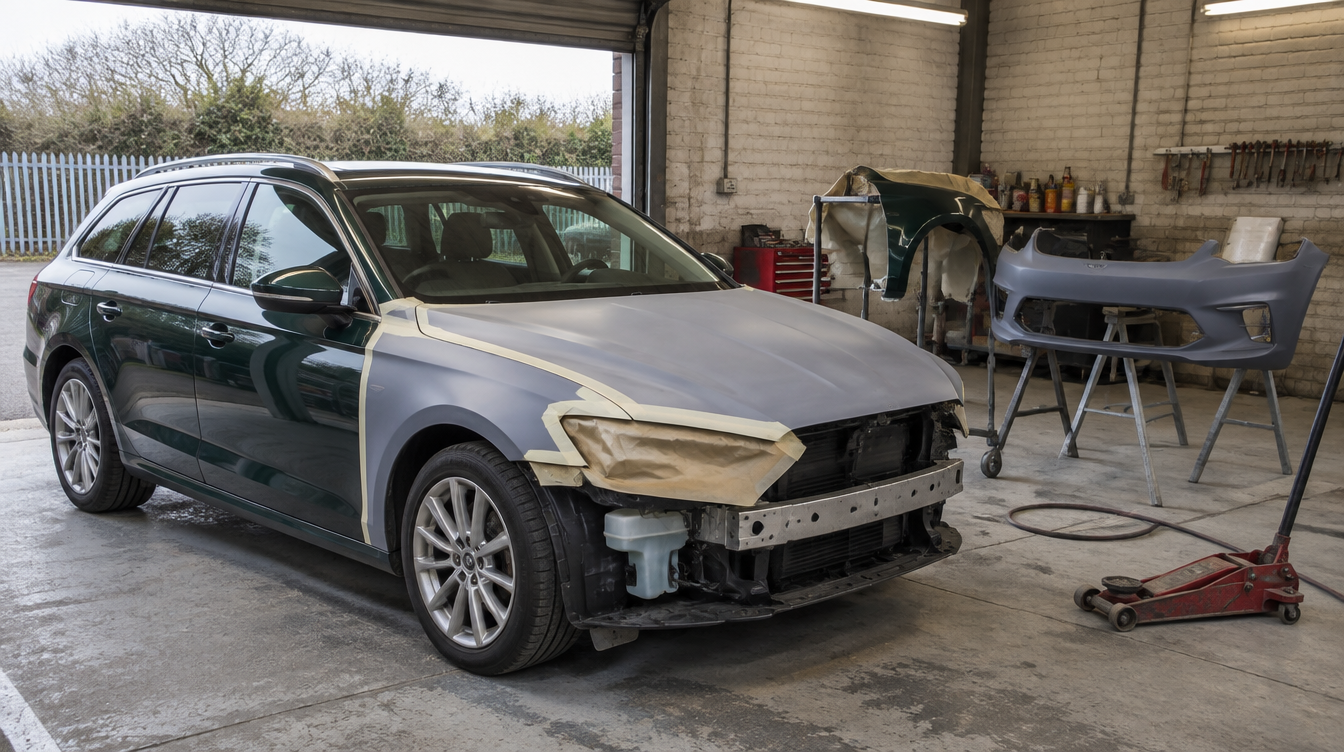
A repaired Cat S or Cat N car can go back on the road once it is roadworthy, taxed, insured and, if it is over three years old, covered by a valid MOT. There is no special write-off inspection to pass. The one real paperwork difference is the log book: a Cat S car needs a new V5C from DVLA with the category recorded on it, while a Cat N car normally keeps its existing one.
That is the short version. The detail matters if you rebuild cars for a living, because a missing V5C or a weak repair file costs you weeks and margin at resale. Here is the process in the order you will meet it.
Which write-off categories can go back on the road?
Only two. GOV.UK guidance on insurance write-offs (checked on 20 November 2026) says Category N and Category S vehicles can be used again if they are repaired to a roadworthy condition. Category A must be crushed entirely, and Category B must have its body shell crushed, although parts can be salvaged.
The categories themselves come from the ABI Code of Practice for the Categorisation of Motorised Vehicle Salvage, with the current version dated May 2025. The split is about the type of damage, not the repair bill: Cat S means damage to the structural frame or chassis, Cat N means the structure was not damaged. If you want the pricing side of that split, see our guide to the differences between Cat S and Cat N that change a car's value.
How do you get a V5C for a repaired Cat S car?
This is the step that catches new rebuilders out. When a car is written off as Cat S, the complete log book goes to the insurer, and GOV.UK says DVLA then records the vehicle's category in the log book when a new one is issued. A Cat S car therefore usually reaches you with no V5C at all.
If the previous keeper retained the car: GOV.UK says they send the complete log book to their insurer and apply for a free duplicate using form V62. Ask the seller whether that application has gone in before you agree a price.
If you are the new keeper and there is no V5C: you apply to DVLA in your own name with form V62. A fee can apply to a new keeper's application, so check the current form on GOV.UK.
Allow time. A postal application is not instant, and you cannot easily retail a car without a log book. Send the V62 on the day the car lands, not the day the paint is dry.
The replacement V5C will carry a note that the car has been salvaged following structural damage. That note is permanent. Our guide to the paperwork involved in selling a damaged car covers the seller's side of the same handover.
Does a Cat N car need to be re-registered?
No. GOV.UK says the keeper can keep the log book for a Category N vehicle, so in most cases a Cat N car comes with its V5C and you simply register yourself as the new keeper, or use the motor trade section if you are buying as a trader.
The write-off is still recorded. The Cat N marker sits on the industry write-off register and will appear on any vehicle history check for the life of the car, even though the log book itself is not reissued. If a Cat N car is offered with no V5C, treat that as a question to answer before you offer, not after.
Does a repaired write-off need a new MOT or inspection?
There is no write-off-specific test. The Vehicle Identity Check scheme, which used to apply to more seriously damaged cars, was abolished in October 2015 and nothing replaced it. What remains is the ordinary law that applies to every car:
The car must be roadworthy. That is the test in the GOV.UK guidance, and responsibility sits with whoever puts it on the road.
It needs a valid MOT if it is more than three years old. You will see claims online that a Cat S car must pass a fresh MOT after repair by law. We could not find that requirement in GOV.UK guidance, so check with DVLA or DVSA if you need a definitive answer for a specific car.
It must be taxed and insured before it is driven. Vehicle tax does not transfer with a sale, and a car that has been declared off the road needs taxing again.
In practice, put every repaired write-off through a fresh MOT anyway. An MOT dated after the repair is the cheapest evidence you can buy, some insurers ask for one, and retail buyers expect it. If the car has no MOT, GOV.UK allows you to drive it to a pre-booked test, but it still has to be insured and safe to drive, so trailer anything you are not sure about.
Remember what an MOT does not do. It checks the car against minimum standards on the day. It does not measure chassis alignment or confirm that a structural repair was done to manufacturer method. For Cat S work, a four-wheel alignment printout and, where relevant, a jig or measurement report do that job. Our piece on whether salvage cars are safe to drive goes into what a proper repair looks like.
What do you have to tell insurers and buyers?
The category never comes off. Insurers will ask whether the car has been written off, and the answer has to be accurate. Some will want an engineer's report or a post-repair MOT before they quote, and a few will not cover write-offs at all, so get the car quoted before you price it. We cover the detail in can you insure a Cat S or Cat N car.
If you sell cars as a business, disclosure is not optional. Business Companion, the Trading Standards guidance for businesses, gives failing to tell a consumer that a car was previously an insurance write-off as an example of a misleading omission. Put the category in the advert and on the invoice, not just in the conversation. This is the general position rather than legal advice, so speak to your local Trading Standards service if you are unsure how it applies to you.
What repair evidence should you keep?
A repaired write-off sells on its file. Build it as you go:
Photos of the damage as bought, from every angle, before a single panel comes off.
Photos during the repair, especially of structural work before it is covered by trim or paint.
Invoices for parts, with part numbers, and for any work you subcontract.
Alignment, jig or measurement printouts for Cat S cars.
Evidence that airbags, seatbelt pretensioners and driver assistance sensors were replaced or recalibrated where they were affected.
The fresh MOT certificate and the new V5C.
A buyer who can see the whole story pays closer to clean-car money. A buyer who has to take your word for it prices in the worst case.
Where does the margin come from?
Paperwork and process only protect a margin that was there at the start. That margin is set when you buy, and it is thinner once auction charges are added to the hammer price. On Second Gears, drivers who retain their vehicle after a write-off list it and sell direct, not at auction, to verified trade buyers. One membership unlocks every car and price, offers are free to make, and there is a small introduction fee only when a seller accepts, far less than auction fees. Our field guide to where to buy salvage cars in the UK compares the sourcing routes side by side.
Had a car written off yourself? You can retain your vehicle, sell direct and keep the difference: get a valuation and list it free.
Related Articles
What Trade Buyers Actually Look For in a Damaged Car Listing
Every damaged car listing gets the same ten-second scan from a trade buyer before they decide to read on or move on. Knowing what happens in those ten...
How Long Does It Take to Sell a Damaged Car? Honest Timelines
"How fast will it sell?" is the second question every damaged car seller asks, right after "what's it worth", and the honest answer is that the range...
Non-Fault Accident Replacement Car: Your Rights
Most drivers think the best they can hope for while their car is repaired is a courtesy car: whatever small hatchback the garage has spare, if their p...