
Selling a Car With a DPF or EGR Fault: Your UK Options
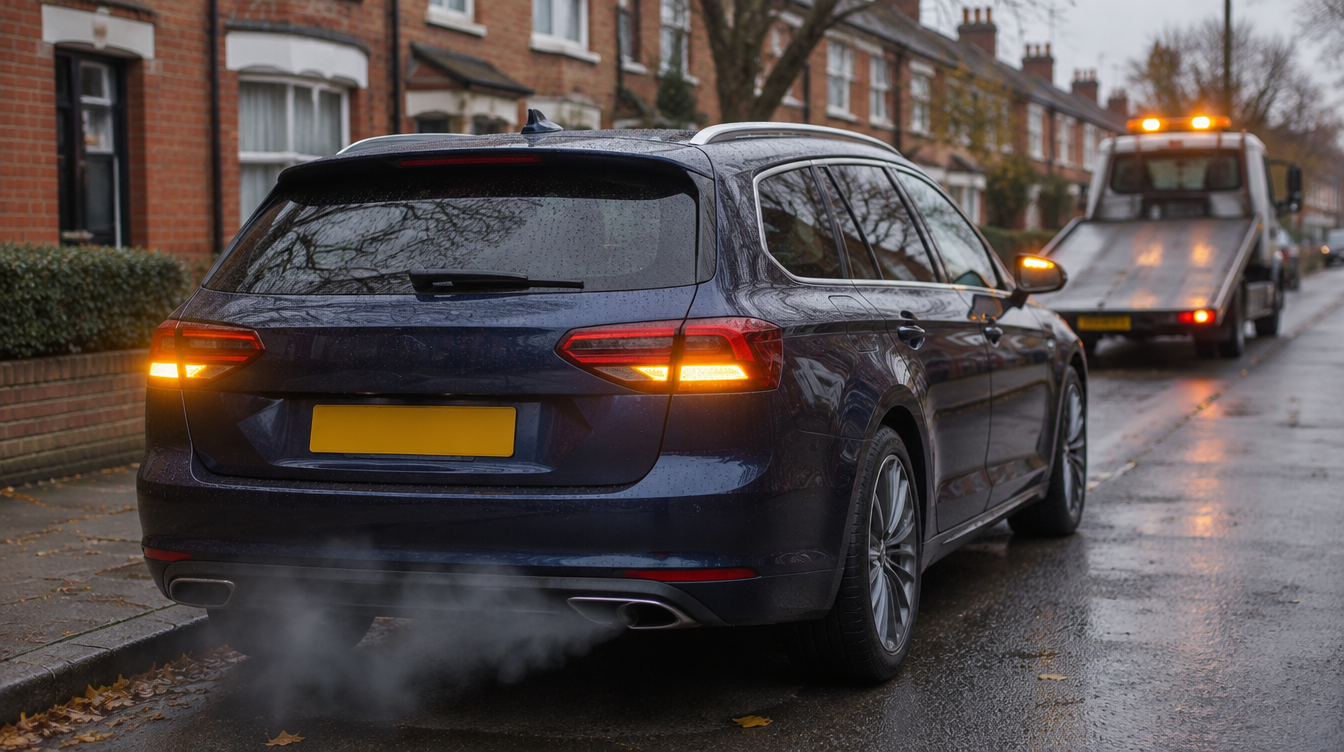
Yes, you can sell a car with a DPF or EGR fault in the UK, and you do not have to fix it first. A blocked diesel particulate filter or a sticking EGR valve can turn a sound diesel into a car with warning lights, limp mode and a repair quote that rivals its value, but trade buyers who repair these faults at cost still want it. Describe the fault honestly, do not be tempted by a filter removal, and get offers from buyers who price the whole car rather than just the problem.
What do DPF and EGR faults actually mean?
The diesel particulate filter (DPF) sits in the exhaust and traps soot. It cleans itself by burning that soot off in a process called regeneration, which needs a hot exhaust and a sustained run. A car used mainly for short, low-speed trips rarely gets there, so the soot builds until the filter restricts the exhaust and the engine management system steps in.
The exhaust gas recirculation (EGR) system feeds a portion of exhaust gas back into the intake to cut nitrogen oxide emissions. The valve and its cooler live in a stream of sooty gas, so they clog with carbon and stick open or closed.
The two faults are often linked. A faulty EGR valve makes the engine produce more soot, which loads the DPF faster, so a car can arrive at the garage with both. Typical symptoms include:
A DPF warning light or engine management light on the dashboard
Limp mode, with power and revs restricted
Rough idle, hesitation or stalling
Higher fuel consumption and a rising oil level
Visible smoke from the exhaust
Is it worth repairing a DPF or EGR fault before selling?
It depends where on the repair ladder the car sits. The cheap end is a forced regeneration or a professional clean, plus an EGR valve clean. The expensive end is a replacement filter, a new EGR valve and cooler, and whatever caused the problem in the first place, which may be an injector, a sensor or a failed additive system. On an older, higher-mileage diesel a new filter fitted at retail labour rates can cost more than the car is worth.
Two things make repairing before sale a poor bet. First, a cleaned filter blocks again if the root cause is not found, so you can pay for a fix that does not hold. Second, a replacement has to be the right part: government guidance on catalytic converters and diesel particulate filters, updated in May 2023, says a DPF fitted to a Euro 5 or later vehicle must be type-approved, which rules out the cheapest options.
A trade buyer buys parts at trade prices and does the labour in-house, so the same repair costs them far less than it costs you. That gap is why paying for a proper diagnosis is usually money well spent, and paying for the full repair usually is not. The same logic applies to bigger mechanical failures, covered in our guide to selling a car with engine problems.
Can you sell a car with the DPF removed or the EGR blanked?
Removing the filter looks like a cheap way out, and plenty of garages have offered it. The Department for Transport's guidance note on diesel particulate filters, last updated in December 2013, is clear that removal will almost always make the vehicle illegal for road use, with fines of up to £1,000 for a car and £2,500 for a light goods vehicle. DVSA has also warned that undeclared illegal modifications of this kind could invalidate insurance.
So do not remove a filter to make a car saleable. It lowers the value to any buyer who intends to put the car back on the road properly, because they have to buy and fit the missing parts.
If your car has already had its DPF removed or its EGR blanked or mapped out, perhaps by a previous owner, the answer is disclosure. Say so plainly in the listing. Trade buyers can refit the correct parts or break the car for spares, and they will price it accordingly. What causes trouble is a buyer discovering it afterwards. If you are unsure where you stand, check with DVSA.
Will a DPF fault fail the MOT?
Often, yes. Three checks matter, all set out in DVSA's published MOT guidance:
Since February 2014, a car that was built with a DPF fails the MOT if the filter is no longer there.
Since the MOT changes of 20 May 2018, a car fitted with a DPF gets a major fault if the tester can see smoke of any colour coming from the exhaust, or finds evidence that the filter has been tampered with.
The MOT inspection manual treats manufacturer-fitted emission control equipment that is missing, obviously modified or obviously defective as a major defect.
A failed or expired MOT does not stop you selling. It changes who the right buyer is and how the car gets moved, which we cover in selling a car that has failed its MOT.
How much is a diesel with a DPF fault worth?
There is no honest single figure, because the fault is only one line in the buyer's calculation. What a trade buyer weighs up is the value of the car once repaired, the realistic cost of getting it there, and how confident they are in the diagnosis. Age, mileage, service history, bodywork and whether the car still drives all move the offer more than the warning light does.
Demand for used diesels has not disappeared. SMMT figures published in November 2026 show 623,354 used diesel cars changed hands in the third quarter of 2026, a 30.7% share of the used market, even with transactions down 5.3% on the year before. A repaired diesel has a ready market, which is why a rebuilder will pay for one with a fixable fault.
It also means scrap is rarely the right first move. A scrap price is based on weight, not on what the car is worth repaired. Our scrap vs sell comparison sets out when each route makes sense.
How to sell a car with a DPF or EGR fault
Get the fault codes read. A printout or photo of the diagnostic report tells a buyer whether this is a blocked filter, a failed sensor or something deeper.
Keep the paperwork. Garage quotes, invoices for any cleaning or regeneration already tried, and the service history all reduce the buyer's risk, and less risk means a stronger offer.
Describe it exactly. State the warning lights showing, whether the car is in limp mode, whether it starts and drives, and whether any emissions equipment has been removed or modified. See what trade buyers look for in a damaged car listing.
Do not force it. Driving on in limp mode with a badly blocked filter risks further damage. If it will not drive, sell it as it stands; our guide to selling a non-runner explains how collection works.
Put it in front of several trade buyers. One part-exchange valuation tells you what one dealer thinks. Competing offers from rebuilders and dismantlers tell you what the car is worth.
That last step is what Second Gears is built for. It is a marketplace, so you list the car once and verified trade buyers make offers direct to you. You sell direct, not at auction, and keep the difference an auction would have taken. It is free to list, with a small success fee only if the car sells and nothing to pay if it does not.
List your car free on Second Gears
Trade buyer looking for diesel stock with fixable faults? Register as a trade buyer.
Related Articles

The Fastest-Growing Car Rebuilders in the UK Right Now and What They’re Fixing
Britain's rebuild scene has gone mainstream. What was once a quiet corner of the trade is now an industry attracting serious money, online audiences i...
Paperwork to Sell a Damaged Car: V5C, DVLA and More
To sell a damaged car in the UK you need one document above all others: the V5C log book in your name. Add a written receipt, any write-off or repair...
Can you Insure a Cat S or Cat N Car in the UK?
Yes. Cat S and Cat N cars can be insured in the UK. But the process is slightly different to insuring a standard used car, and going about it the wron...